About Me
Many of us learn to hide parts of ourselves in order to feel safe, accepted or loved. These ways of protecting ourselves often begin in childhood and, whilst they may once have helped us to manage difficult experiences, they can become less helpful in adulthood, leaving us feeling anxious, disconnected, stuck or uncertain about who we really are.
Donald Winnicott captured something of this experience when he wrote, “It is a joy to be hidden, and disaster not to be found.” These words have quietly accompanied me throughout my work as a psychotherapist and reflect something of how I understand the therapeutic process: not simply as addressing what is difficult, but as creating the conditions in which parts of ourselves can begin to be recognised and understood.
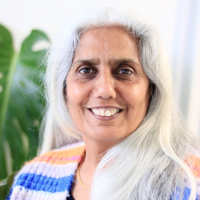
I am an Integrative Psychotherapist with over fifteen years of clinical experience, working with individuals and couples. My experience spans private practice, specialist work in attachment and parent–infant psychotherapy, psychotherapy research, teaching in higher education and clinical supervision.
I work with a range of difficulties including anxiety, depression, stress, low self-esteem, shame, grief and loss, relationship difficulties, trauma, life transitions, and questions around identity and belonging. I have a particular interest in how our early relationships and experiences can continue to influence how we see ourselves and relate to others.
Culture and identity are also important to my work. As an Asian woman, I recognise that our sense of who we are can be closely connected to family, culture, expectations and belonging. For some people, developing a more authentic sense of self involves negotiating different parts of themselves and the worlds they inhabit. I believe these experiences deserve space to be explored rather than simply understood as individual difficulties.
My Approach
I am originally trained within the person-centred tradition and have developed an integrative approach drawing on humanistic, relational, attachment-informed and psychodynamic thinking, alongside embodied approaches. I continue to value the importance of empathy, acceptance and genuine human connection within the therapeutic relationship.
I am interested in what brings you to therapy now, while also being curious about the experiences and relationships that may have shaped you. Sometimes ways of coping that developed early in life can continue into adulthood, even when they no longer serve us in the same way. Understanding these patterns can help us make sense of feelings, relationships and behaviours that may otherwise seem difficult to understand.
I believe psychotherapy is not simply about applying tools and strategies or trying to fix what feels wrong. It is about developing a relationship in which you can feel sufficiently safe to explore, understand and accept different parts of yourself. Through this process, there can be an opportunity to recognise old patterns, develop greater self-understanding and consider different ways of being in relationship with yourself and others.
Ultimately, my aim is to support you in developing greater awareness, relationality and emotional freedom in how you understand yourself and live your life.
I work with
- Couples
- Individuals
- Private healthcare referrals
Special Interests
Like all UKCP registered psychotherapists and psychotherapeutic counsellors I can work with a wide range of issues, but here are some areas in which I have a special interest or additional experience.
Types of Therapies Offered
- Humanistic Psychotherapist
Types of sessions
- Face to Face - Long Term
- Face to Face - Short Term
- Home Visits
- Online Therapy
Office
Cannon Park
CV4 7DY
United Kingdom (UK)
View Map
Cost:
£80.00Concession:
I offer some concessionary rates on request.UKCP College
- Humanistic and Integrative Psychotherapy College (HIPC)
Sukhdev Sembi
CV4
Bookmarks My Shortlist
All shortlisted profiles
Links
Connect with us
Privacy | Accessibility | Sitemap | © 2026 UK Council for Psychotherapy. All rights reserved | Registered charity no. 1058545 | Company no. 3258939 - Registered in England
