Our national register is temporarily unavailable due to maintenance. Check back soon. In the meantime, please contact registration@ukcp.org.uk to check our register.

My Approach
Those drawn to work with me are often people who want to make better connection with their emotional landscape, their embodied senses and the patterns that shape their relationships. I specialise in working with neurodivergent people and individuals and couples in queer, non-monogamous relationships and non traditional family configurations.
It could be that your struggles already feel clear to you- you’re grieving a significant loss or coming to terms with an early trauma. Maybe you're navigating a non-traditional relationship, exploring your gender or your sexuality, or simply seeking a space to be heard. A place of holding where you don’t have to explain the basics of your life or identity.
However, more often what brings people to therapy isn’t a specific problem, but a feeling - a creeping disconnection, waves of anxiety that seems disproportionate and overwhelming, a deeply embodied tension or sense of dread, or the quiet intuition that something needs to shift. You may not have all the words yet, but is there an urge to listen more deeply to yourself? To make a little breathing room for parts that have little, if ever been heard?
In our work together, we can make space for the emotional, relational and embodied parts of your experience - supporting you to reconnect with your own authority, clarity and aliveness. I’m deeply invested in creating a dialogue that supports, gently challenges, and nourishes you. Whether you’re facing a crisis, struggling with emotional wounds from the past, or feeling a quiet sense that something isn’t right, therapy can support more connected, hopeful and meaningful ways of being in the world.
A Relational and Holistic Approach
My approach recognises the unique complexity of each person’s unfolding experience of their world and relationships. While talking therapy is at the core of my work, I draw upon trauma-informed embodiment practices. These practices can shift fixed, habitual patterns that are causing conflict, confusion, or distress.
Queer-Affirming, Anti Oppressive Practice
As a queer therapist I advocate for inclusive practice. My approach is gender affirming, making space for all expressions of sexuality, gender and neurodiversity. Challenging racism, ableism and migrant persecution are deeply important to me. This includes ongoing striving for decolonial practice, through consistent learning and training.
Non-Monogomy and Kink Aware
I specialise in working with clients whose sexual and romantic relationships challenge conventional norms. With over a decade in queer kink communities my lived experience supports my understanding of the complexity and satisfaction that relationship diversity can offer. I am well equipped to offer support, reflection and affirmation to the ways expansive expressions of sexuality and romance can be both challenging and enriching. This includes those within the Asexual and Aromantic spectrum as it always should.
Queer Kinship and Co-Parenting
I am deeply invested in all models of family building, acknowledging the multitude of configurations and networks of support involved in raising children. I have broad experience and understanding of parenthood outside of a nuclear model and am well acquainted with the many challenges and creative advantages of non-normative approaches to family and building community that involves children and young people. I specialise in working with adults who were raised in single parent households, and supporting single parents in what can sometimes be a lonely and isolating experience of parenthood.
Embodied Practice
As a trained contemporary dancer and movement director and educator, I understand the ways cognitive processes can dominate and distract from the important sensory information our bodies have to offer. Integrating a combination of somatic practice and Laban movement analysis I am sensitively attuned to the embodied process of my clients. This part of my practice is Polyvagal-informed and Nervous system-aware.
The Impact of Isolation and the Value of Connection
So many of us have been raised in societies that push us toward individualism, leaving us to believe that being an adult means managing life’s challenges on our own. As social beings, navigating significant losses, painful events, or major life changes in isolation can be excruciatingly lonely, leaving us overwhelmed, anxious, or low. I am here to help you in opening up possibilities for connection and building ways to feel more fulfilled through reflection, holding and support.
My therapy space is part of St. Margaret’s House, a lovely historic building and hub for community arts and charities, in a leafy corner of Bethnal Green. I often have my calm old collie-cross Cai in my sessions. He’s a gentle and affectionate dog who brings his own supporting presence.
Feel free to book a 15 minute video consultation to see how we might work together.
About Me
I’m Joe Wild, a Gestalt psychotherapist, movement specialist, and educator based in East London. I offer both in-person and online therapy. I hold an MA in Gestalt Therapy from the Gestalt Centre London, alongside a certificate in counselling from Goldsmiths University, an MA in Movement Studies from CSSD, and a BA in Dance Theatre from Laban. My training, first as a contemporary dancer and later as a movement specialist and teacher, has given me an expansive understanding of the human capacity for making meaning through connection with others. It has also grounded me in the belief that the body is the vehicle for our lived experience. I am a third-generation therapist—both my mother and grandmother are practicing psychotherapists. Attuned listening and empathic relating were modeled to me from day one. My father, a performance artist and carpenter, instilled a hands-on approach to life’s practical tasks and a deep appreciation for creativity.
Types of Therapies Offered
- Gestalt Group Psychotherapist
- Gestalt Psychotherapist
Office
St Margrates House21 Old Ford Rd
Bethnal Green
E2 9PL
United Kingdom (UK)
View Map
UKCP College
- Humanistic and Integrative Psychotherapy College (HIPC)
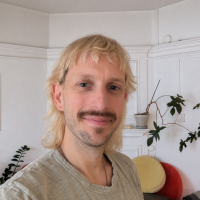
Joe Wild
E2Bookmarks My Shortlist
All shortlisted profiles
Links
Connect with us
Privacy | Accessibility | Sitemap | © 2026 UK Council for Psychotherapy. All rights reserved | Registered charity no. 1058545 | Company no. 3258939 - Registered in England
