My Approach
Psychotherapy is a conversation in which you and I – client and psychotherapist - are interested in exploring and understanding you: who you are, how you're living your life, and how you are with that.
Most of us spend a lifetime working out how to be ourselves and how to fully live our lives. From our earliest years we are learning what is expected of us; how we need to behave to keep others happy or avoid their anger, how to be acceptable and avoid rejection. Often, we’re not even aware of the ways in which we have been moulded by our experiences, until maybe one day we realise that perhaps who we have become and how we are living doesn’t quite align with who we truly are, or who we might have been. The ways in which we have contorted ourselves to suit others might seem at odds with who we imagine we might be if we were free to live to our full potential. The beliefs which we adopted, or the front that we learnt to present to the world might no longer feel like they fit. The conversation of psychotherapy can help to shed light on how you have become you, and whether there are parts of you which have been forgotten.
Psychotherapy is a conversation between you and I, as we meet and develop a therapeutic relationship together. Just as it is in our early relationships with others that we are shaped, so it is within a relationship now that we can discover ourselves and learn new ways. From very early childhood we use our experiences with others, and particularly parent figures, to develop our inner self. You might imagine this “self” as scaffolding at the centre of you and your life, which supports everything – your relationships, your work, your well-being. As children, every time we feel loved and valued, or know that we matter and we belong, the self scaffolding grows. For many of us, a lot of that scaffolding might be strong and well built, but other parts might not have formed well. People who have had difficult relationships with a parent figure, or who have experienced trauma, can be left struggling to feel solid and stable in adulthood because their scaffolding has parts missing. Feeling genuinely heard, and experiencing the unwavering presence of the psychotherapist in the conversation can help the client to rebuild some of those missing parts.
Some people seek this conversation when they are struggling with a particular difficulty, or feeling stuck, but it's a conversation which can be valuable at any time, for anybody. You don't need to have an issue to bring to psychotherapy, just a curiosity about yourself.
In psychotherapy, the relationship between the therapist and the client is the space where the client can explore feelings and patterns of behaviour and begin to know themselves better. In ecopsychotherapy, this relationship is extended to include the natural world.
Ecopsychotherapy sessions take place outdoors. The landscape, weather, sunlight, plants and animals might all become part of the therapy process. You can read more about Ecopsychotherapy on my website.
About Me
I am an Integrative Pychotherapist, Ecopsychotherapist and Supervisor working in Somerset. I studied psychotherapy at Bath Centre for Psychotherapy and Counselling, where I completed a six year training, completing a Masters and Diploma in Integrative Psychotherapy, with a particular specialism in Ecopsychotherapy. I then completed a Diploma in Supervision.
My training is in Integrative Psychotherapy. This means that I have studied a range of approaches and styles, and have acquired a wide understanding of psychotherapeutic theories. I am particularly interested in Ecopsychotherapy, which can involve working outdoors.
I have worked as a Bereavement Counsellor at St Margaret’s Hospice.
Before training as a psychotherapist I was a secondary school teacher for nearly twenty years, predominantly working with pupils with emotional and behavioural difficulties.
I work with
- Individuals
Types of Therapies Offered
- Humanistic and Integrative Psychotherapist
Types of sessions
- Face to Face - Long Term
- Face to Face - Short Term
- Online Therapy
- Telephone Therapy
Taunton Office
SkilgateSkilgate
Taunton TA4 2DQ
United Kingdom
View Map
UKCP College
- Humanistic and Integrative Psychotherapy College (HIPC)
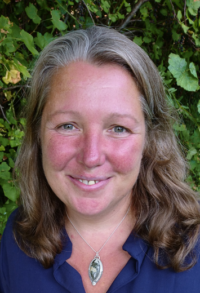
Beth Livingston
Taunton TA4Bookmarks My Shortlist
All shortlisted profiles
Links
Connect with us
Privacy | Accessibility | Sitemap | © 2026 UK Council for Psychotherapy. All rights reserved | Registered charity no. 1058545 | Company no. 3258939 - Registered in England
