
Anahi Ayala Iacucci, UKCP Accredited Psychotherapist

Anahi Ayala Iacucci

W1W
Shortlist Share
Anahi Ayala Iacucci, UKCP Accredited Psychotherapist

Anahi Ayala Iacucci

W1W
Shortlist Share

My Approach

Many of the people I work with are capable, often high-achieving — and quietly exhausted by the gap between how their life looks from the outside and how it feels from the inside. They may have already tried to understand themselves intellectually, or had therapy before that didn't quite reach the right depth. Something remains stuck: in the body, in patterns that keep repeating, in a sense of self that feels fragmented or hard to access. Others have been carrying something heavy for a long time — memories that won't settle, feelings that seem too big or too confusing to name, a body that stays tense even when the danger has passed.

I'm a UKCP-accredited integrative psychotherapist specialising in complex trauma and PTSD. My work is built on the understanding that lasting change doesn't come from insight alone — it comes when the nervous system, the body, and the mind are all part of the process. I work somatically (using body-based techniques to restore a felt sense of safety), alongside EMDR (a research-supported method for processing traumatic memories that remain stuck), parts-based work (IFS), relational and attachment-focused therapy, and mindfulness.

Therapy with me tends to be substantive and exploratory. I'm interested in root causes, not just symptom management. Sessions are paced to you — there is no rushing — but there is genuine depth and movement over time.

I work in person in Central London and online. Sessions are available in English, Italian, and Spanish.

About Me

Before I became a psychotherapist, I spent nearly two decades working in humanitarian settings across more than 80 countries — with UNHCR, UNICEF, and IOM — alongside refugees, survivors of violence, and communities rebuilding after crisis. I held senior roles covering some of the world's most complex emergencies, which meant working alongside people under extraordinary pressure: aid workers, journalists, diplomats, first responders, and the communities they served.

That background shaped the clinician I've become in ways that no training alone could. I understand, from the inside, what high-pressure professional environments do to people over time, how trauma can coexist with competence and achievement, and what it takes to build genuine safety rather than just functional coping.

I trained as a psychotherapist at the Centre for Counselling and Psychotherapy Education (CCPE) in London, and before entering private practice I worked in an NHS Mental Health Core Team, a residential facility for people in suicidal crisis, a bereavement service, and One in Four, a charity supporting survivors of childhood sexual abuse. I now work exclusively in private practice in Central London and online.

I am UKCP-accredited (Humanistic and Integrative Psychotherapy College), BACP-registered, and NCPS-accredited. My fee is £150 per session.

I work with

  • Individuals

Special Interests

Like all UKCP registered psychotherapists and psychotherapeutic counsellors I can work with a wide range of issues, but here are some areas in which I have a special interest or additional experience.

Recovery from abuse — whether childhood abuse, narcissistic control, coercive relationships, or institutional harm — is rarely straightforward, and it is rarely fast. What makes it complex is that the most lasting damage is often not to the memory of what happened, but to the internal architecture that formed around it: the distorted beliefs about the self, the difficulty trusting perception, the relational patterns that developed as survival strategies and now create difficulties in every close relationship. My clients dealing with abuse histories are often highly self-aware. They may have read extensively, had previous therapy, and have a sophisticated intellectual understanding of what happened to them. What they're looking for is something that reaches further — a therapeutic relationship and an approach that works at the level of the body and the nervous system, not just the narrative. I bring to this work both deep clinical training and nearly two decades of direct experience with survivors of violence and institutional harm across some of the world's most difficult contexts. This is not background knowledge for me. It is the foundation of my practice.
Chronic anxiety in an otherwise capable adult is rarely just anxiety. More often it is the nervous system's learned response to an environment — usually in early life — that was unpredictable, threatening, or emotionally unsafe. The hypervigilance, the difficulty switching off, the tendency to anticipate what could go wrong: these were once adaptive. They kept you ahead of the threat. The problem is that the system doesn't automatically turn off when the threat is gone. The people I work with around anxiety are typically not struggling to function — they are functioning very well, often better than most. What they notice is the cost: the constant background noise of worry, the difficulty being fully present, the way relationships are complicated by the need to feel in control. I work with the roots of anxiety rather than its symptoms — using somatic and trauma-informed approaches to help the nervous system genuinely settle, not just strategies to manage it. The aim is not to cope better with anxiety but to no longer need it.
Depression that persists despite a life that "should" feel fulfilling is one of the most disorienting experiences my clients describe. It carries a particular kind of shame for people who are successful, capable, and by most measures have everything in order — which often means it has gone unnamed and unaddressed for years. In my experience, depression in high-functioning adults is frequently a signal rather than a primary condition: a sign that the self has been running on performance and suppression for too long, that unprocessed losses or injuries have accumulated beneath the surface, or that a person has spent so many years meeting external expectations that they have lost contact with what they actually feel, want, or need. I work with depression at this level — not as a set of symptoms to be managed, but as meaningful communication from a part of you that has been unheard. That approach takes more time than symptom management, and it asks more of the client. But it tends to produce change that lasts.
PTSD is not just a diagnosis for soldiers or disaster survivors. It shows up in the consulting rooms of high-performing professionals who had difficult childhoods, in executives who have spent years in high-stakes environments, in people who left damaging relationships years ago and still find themselves hypervigilant, reactive, or unable to fully trust. It can look like success on the outside and chronic exhaustion on the inside.I work with PTSD and complex PTSD (C-PTSD) using an integrative approach that combines EMDR — one of the most evidence-based treatments available for PTSD — with somatic therapy, which works directly with the nervous system rather than relying on insight and cognition alone. The reason this matters is that PTSD is not primarily a thinking problem. The traumatic memory is stored differently in the brain and body, and it requires an approach that works at that level. Clients I work with are often highly intelligent people who have already analysed what happened to them extensively — and found that understanding it hasn't changed how it feels. That's exactly what this kind of therapy addresses.
Many of my clients don't immediately think of themselves as trauma survivors. They're capable, often high-achieving people who have simply always pushed through — who built their competence, in part, because of what they survived. What brings them to therapy is usually something more subtle: a persistent sense of disconnection, patterns in relationships that keep repeating no matter how much they understand them intellectually, or a feeling that they are performing their life rather than living it.I specialise in complex and developmental trauma — the kind that accumulates over time, often beginning in childhood or adolescence, and that shapes not just how we think but how our nervous systems respond to the world. My work combines somatic approaches (working with the body's stored stress responses), EMDR (a research-supported method for processing memories that remain neurologically "stuck"), parts-based work, and relational therapy. I've spent nearly twenty years working alongside people who have survived extraordinary circumstances — as a humanitarian professional in more than 80 countries — and that experience is woven into how I work. I understand, at a deep level, what it means to function well on the outside while carrying something unresolved within.

Types of Therapies Offered

  • Transpersonal Psychotherapist

What I can help with

  • ADHD
  • Autism
  • EMDR
  • Mental Health Issues

Types of sessions

  • Face to Face - Long Term
  • Face to Face - Short Term
  • Online Therapy

Office

17 Gosfield Street
W1W 6HE
United Kingdom (UK)

View Map

Cost:

Therapy Session: 150£
EMDR Session: 180£

London Office

2 Warwick Crescent
London W2 6NE

  Wheelchair accessible View Map

Cost:

Therapy Session: 150£
EMDR Session: 180£

UKCP College

  • Humanistic and Integrative Psychotherapy College (HIPC)
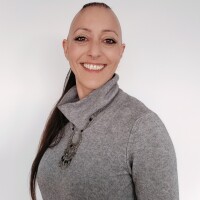
Anahi Ayala Iacucci

Anahi Ayala Iacucci

W1W

Bookmarks My Shortlist

All shortlisted profiles

Find a therapist near you