UKCP Conference 2026 – Threads across the divide: weaving connections in a fragmented world
This summer, established and emerging voices in psychotherapy will come together to deliver thought-provoking talks, workshops and discussions to explore how we can foster meaningful human connection in times of increasing isolation.
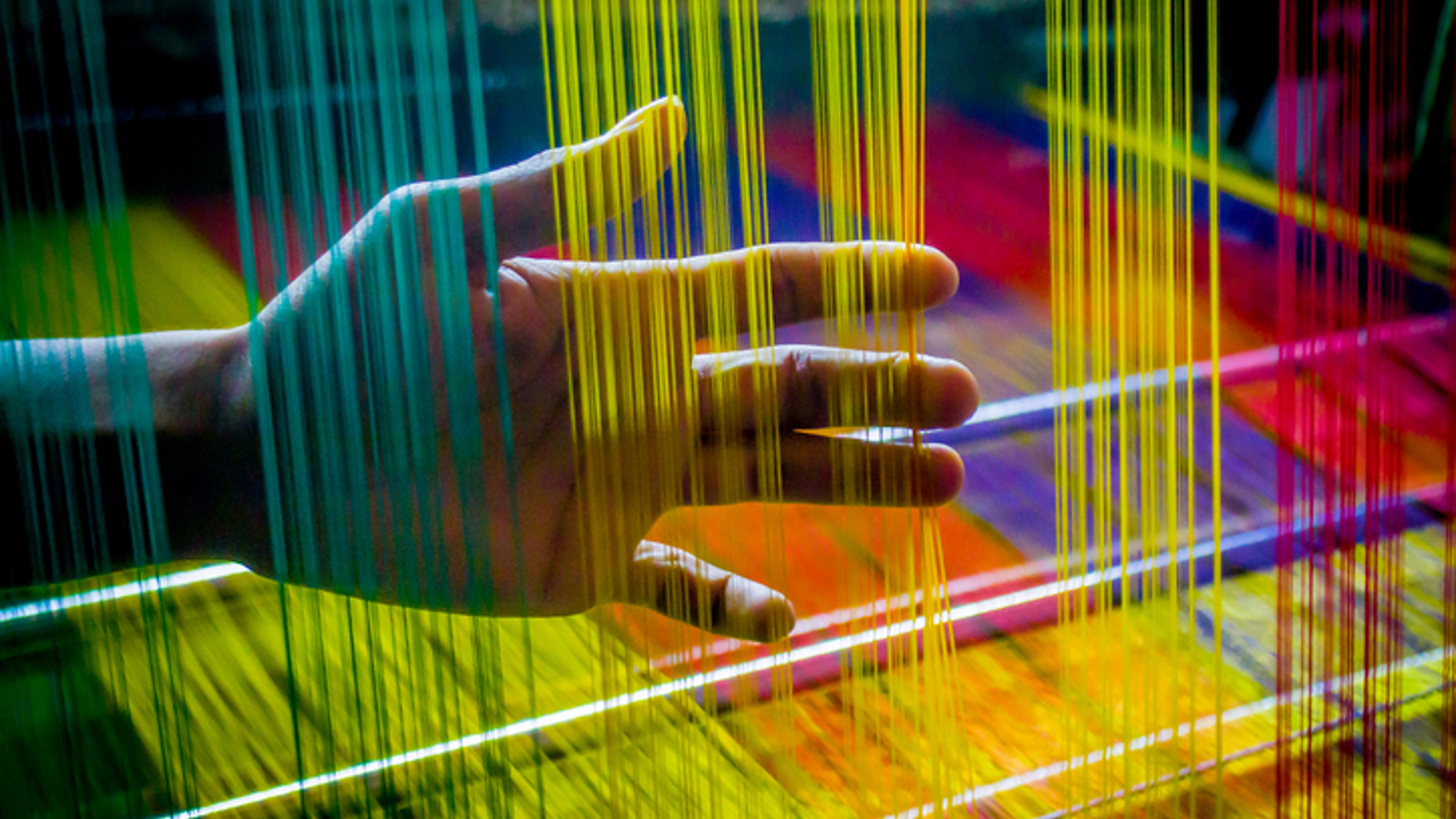
Join us for our 2026 conference, Threads across the divide: weaving connections in a fragmented world. Together, we’ll delve into the paradoxes of division and unity and consider how the therapeutic relationship can help bridge the gaps that fragment us.
We’ve been working hard to put together an inspiring line-up of speakers and a dynamic programme for UKCP Conference 2026.
We're pleased to announce our event programme, which gives a breakdown of which speakers will present on each day, as well as a general overview of the conference.
Day one (Friday 19 June):
9-10am: registration, arrival refreshments and exhibition
10am-5pm: sessions (including breaks)
5-6pm: networking
Day two (Saturday 20 June):
9-10am: registration, arrival refreshments and exhibition
10am-5pm: sessions (including breaks)
Speaker information and session synopses
Discover more about our exciting line up of speakers. Speakers have been listed in alphabetic order. For a breakdown of which speakers will be presenting each day of the conference, please see our event programme.
Dr Catherine Knibbs is a child and adult trauma psychotherapist, researcher, and pioneer of cybertrauma theory, with over 20 years experience at the intersection of child development, trauma and technology. She is a TEDx speaker, CEO of Children and Tech, and author of multiple books, including titles with Routledge and the British Psychological Society. Dr Knibbs runs a clinical practice that specialises in online harms and is a leading authority on cyber-enabled trauma and online safeguarding.
Synopsis
Cyber trauma/online harm and its impact on human connections
This talk tackles an urgent and often overlooked question: why does technology belong in the therapy room? It explores this highly topical issue, examining the risks of AI to client process and what therapists need to know about the Attachment Imitator in the therapy room. Dr Knibbs will also discuss the impact of cyber trauma, the importance of including technology in assessments (and how to do this), and why working with children requires greater familiarity with technology and online spaces. This session will equip practitioners with the frameworks they need to understand and work with online harm – and challenge us to consider whether we are ready to meet the world our clients are already living in.
Debbie Livingston is a UKCP transpersonal psychotherapist and supervisor with over 25 years of clinical experience, including thirteen years in an NHS eating disorders service and extensive roles in teaching, ethics and professional development. She is nearing completion of her PhD in professional practice at Canterbury Christ Church University, exploring what psychological clinicians need to better support autistic clients in therapy.
Synopsis
Weaving together: neurodivergence and the therapeutic alliance
Debbie will be doing a joint session alongside Karen Rawden - more information to follow soon.
Dr Dwight Turner is course leader in humanistic psychotherapy at the University of Brighton, as well as a UKCP psychotherapist and supervisor. He is the author of three Routledge books and is an experienced conference speaker, specialising in intersectional practice.
Synopsis
'I belong here. I belong': existential explorations of our intersectional identities in counselling and psychotherapy
Drawing on intersectional theory and existential frameworks – including Emmy van Deurzen's four worlds structure – this presentation uses creativity and poetry to explore the shifting, phenomenological nature of identity. Psychotherapy is challenged to confront this changing psychotherapy landscape. In a world more polarised than it has been since the Second World War, and with clients increasingly presenting with fear and anxiety around identity, Dr Turner asks how practitioners must examine our own positions within systems of power in order to truly meet our clients.
Speaker bio and session information coming soon.
Geoff Hopping is a senior partner at The Link Centre and an experienced UKCP psychotherapist with qualifications in transactional analysis and psychoanalysis, having trained at the Society for Analytical Psychology. He has decades of experience across NHS, the social work sector, and psychotherapy settings including specialist work with complex trauma in high security prisons. He has a keen interest in bereavement, loss and the spiritual dimension of psychotherapy.
Synopsis
Fragmentation (internal and external) and the move towards inter-connectivity
This session explores psychological fragmentation and the internal disconnection, alienation and anxiety that can blur the boundary between inner experience and outer reality. Drawing on Winnicott, Jung, Klein and Francis Weller, it examines how intra-psychic phenomena such as objectification and shadow projection connect to broader societal, political and cultural divisions. Participants are invited to reflect on how these dynamics shape the way we absorb and process the world around us.
Speaker bio and session information coming soon.
Julie Stone is the UKCP’s independent ethics lead and chair of its Ethics Committee. An academic healthcare lawyer and ethicist by background, Julie has directly influenced healthcare regulatory strategy, policy development and professional standards for over 30 years, advising regulators, professional associations and the government.
Synopsis
Ethical fixity and flexibility: whither ethics in a fractured world?
This talk will consider whether a consistent, reflective ethical approach supports therapeutic practice across divides. Is it possible to reach agreement on what values or principles stay constant in a fractured world, where moral courage and ethical duty point good people and good therapists in opposite directions? Julie will consider arguments for both constancy and flexibility in supporting clients in the midst of divided and divisive times. She will also examine approaches to pedagogy which may help trainees acquire ethical wisdom and contemplate how a fragmented profession reaches shared ethical positions.
Dr Linda Finlay is a relational-centred, existentially oriented integrative UKCP psychotherapist, supervisor, and academic. She teaches psychology/counselling at the Open University and mentors master's and doctoral students across the UK and Europe. Her research interests include the application of relational, reflexive, hermeneutic phenomenological approaches to exploring the lived experience of disability and trauma. She is also a widely published author.
Synopsis
The challenges of working relationally
Linda Finlay's session explores what relational psychotherapy looks like in practice, drawing on case studies to examine evocative relational moments that are potentially transformative. While all therapies recognise the significance of relationships in shaping psychological distress and wellbeing, this presentation focuses specifically on work where the therapeutic relationship is used as the primary tool of therapy, considering both the opportunities and challenges this brings. The session also acknowledges the limits of relationality, including when a non-relational approach may in fact be more appropriate.
Karen Rawden is a UKCP psychotherapist specialising in psychosynthesis and neuroaffirmative therapy. She is a certified ADHD clinical provider, a member of the UKCP DiverseMinds Special Interest Group, and has served on the board of the European Psychosynthesis Association (EpA). She also tutors neurodivergent students and delivers programs to therapists on creating supportive and transformational therapeutic spaces for people who identify as neurodivergent.
Synopsis
Weaving together: neurodivergence and the therapeutic alliance
Karen will be doing a joint session alongside Debbie Livingston - more information to follow soon.
Mamood Ahmad is a UKCP psychotherapist, tutor, speaker and published author. He has close to two decades of experience in private practice with specialisms in trauma, multicultural competence and social change. His current primary focus is on driving professional standards change.
Mamood will deliver a joint session alongside Sheetal Amin: Bridging the relational divide: sameness, difference and the wholeness solution
Synopsis
Is our understanding of the relationship strong enough to bridge the divide? Relationship v2.0
In our understanding of the therapeutic relationship lies the hope of weaving together connections that are fragmented, fractured or polarised. This talk explores how these challenges are reflected in our everyday assumptions about relational development and repair, and how we might strengthen our capacity to foster unity and authentic connection. Drawing on his work and his new book, Mamood introduces the concept of Relational Scope and a "Relationship v2.0" framework to enable depth, adaptability and responsiveness in relationships that are marked by embodied threat and systemic and structural injustice.
Speaker bio and session information coming soon.
Nick Totton is a body psychotherapist, trainer, supervisor and training programme creator. He is a published author and was founding editor of the peer-reviewed journal Psychotherapy and Politics International. Nick has held leadership roles at a number of professional bodies, holding the position of chair at Psychotherapists and Counsellors for Social Responsibility, the UK Body Psychotherapy Network, and the Psychotherapy and Counselling Union. He is also a member of the European Association for Body Psychotherapy ThinkTank.
Synopsis
It’s complicated: can we bridge the different approaches to therapy?
Are there distinct positions in psychotherapy, or simply different expressions of a shared endeavour? This talk proposes that the many arguments in the field can be distilled into two broad camps: the Expert position, focused on evidence-based techniques for improving wellbeing, and the Process position, centred on creating a safe, relational space in which an unpredictable process of integration can emerge. Rather than advocating for one over the other, Nick Totton uses a form of internal chairwork to give equal voice to both perspectives, bringing them into dialogue.
Niki D is a UKCP psychotherapist, supervisor and educator with 35 years of experience across private, statutory and voluntary sectors. She specialises in working with gender, sexual and relationship diverse (GSRD) clients. Niki teaches relationship diversity for Pink Therapy and is co-director of Opening Up CPD, where she delivers specialist training for therapists supporting clients in polyamorous and open relationships.
Synopsis
Intimacy without gatekeeping: rethinking exclusivity in romantic and sexual relationships
In many Western contexts, monogamy is positioned as the only relationship style offering genuine health, maturity, and commitment. In this session, Niki D. invites us to consider whether open relationships and polyamory offer a useful lens for exploring how people negotiate closeness and autonomy, novelty and security. Through critical reflection on the relationship scripts we have inherited, participants will explore who belongs in our intimate lives, who is excluded, and why. The session aims to deconstruct the narratives that may unconsciously shape or even limit our work with relationally diverse clients.
Paul Hoggett is emeritus professor of social policy at The University of the West of England, Bristol, and co-founder of the Climate Psychology Alliance.
Synopsis
Paradise lost? The estranged self and the longing for the ideal
In this session, Paul explores the modern self of the global north – haunted by an idealised world just out of reach and marked by three fundamental separations: from nature, from our own creaturely nature and from others. He will examine the cultural and political consequences of these estrangements – including the climate crisis and the rise of authoritarian nationalism – and consider what pathways towards repair might look like.
Dr Paula Hall is a UKCP sexual and relationship psychotherapist specialising in compulsive sexual behaviours and problematic pornography use. She is the founder of The Laurel Centre, the UK’s largest therapy service supporting individuals in addressing unwanted sexual behaviours. She also established Pivotal Recovery, a not-for-profit organisation offering affordable, anonymous resources for those seeking change.
Synopsis
The illusion of intimacy: how pornography fractures and fosters connection
Dr Paula Hall brings nuance and courage to one of the most complex intimacy questions of the digital age. Her talk explores the paradox at the heart of pornography use: how many turn to it to ease loneliness, only to find it deepens isolation and damages relationships. But she will also hold space for the more uncomfortable question – whether some forms of online connection, including relationships with OnlyFans creators, might meet genuine intimacy needs, and what this asks of our evolving understanding of connection and sexuality.
Sheetal Amin is a UKCP psychotherapist with 25 years of experience working with children, young people, adults, families, organisations and communities. Sheetal has led NHS services that provide therapeutic care for Looked After Children (LAC) including adoption, fostering and Unaccompanied Asylum-Seeking Children (UASC). She is a trainer, educator and supervisor and has worked in multi-agency rapid response services (MARRS). Sheetal is currently responsible for supporting partnerships between health, education and social care.
Sheetal will deliver a joint session alongside Mamood Ahmad: Bridging the relational divide: sameness, difference and the wholeness solution
Synopsis
Thinking about representation across the profession: exploring sameness and difference in therapy
Diverse representation across the therapeutic profession that spans modalities, cultures, languages, religious beliefs and theoretical perspectives is essential. This presentation explores how greater representation can better serve those who feel marginalised or under-represented within wider systems of care. It is also an opportunity to consider how the profession can widen access and raise standards for clients who experience displacement and discrimination.
Susie Orbach is a psychotherapist and the author of numerous influential books – her seminal work, Fat Is a Feminist Issue was published in 1978 and has remained relevant throughout the decades. She has also held a long-running column in The Guardian. Susie has a visiting professorship at the London School of Economics, co-founded The Women's Therapy Centre in London (1976) and in New York (1981), and has spent fifty years linking psychotherapy, psychoanalysis and social structure through her writing and lectures.
Synopsis
In Conversation with Susie Orbach – 40 years on: Fat Is A Feminist Issue – contemporary concerns
In this in‑conversation session, Susie Orbach revisits her book, Fat Is a Feminist Issue, forty years since its publication through the lens of today’s cultural forces – from AI‑driven misogyny and the manosphere to weight‑loss drugs and shifting body ideals. Drawing on her clinical and feminist insights, the discussion looks at how body relationship pressures appear in the therapy room and what they reveal about gender, identity and contemporary cultural life.
Oral presentations
In addition to our line-up of speakers, three oral presentations have been selected for inclusion at the UKCP conference 2026. These will form a key part of the programme and allow authors to showcase their innovative projects, research and practice issues.
The presentations will be delivered by:
- Adaku Thelma Olatise
- Keith Oulton
- Magda Raczynska
Please note that submissions are now closed and applicants have been notified of the outcome of their application via email.
Standard rates, including VAT
|
Standard registration (two-day ticket) |
Price |
|
Student/trainee/retired |
£134 |
|
UKCP member |
£306 |
|
Non-member |
£384 |
|
Student/trainee/retired – online |
£75 |
|
UKCP member online – online |
£170 |
|
Non-member – online |
£220 |
|
Standard registration (one-day ticket, Friday or Saturday) |
Price |
|
Student/trainee/retired |
£84 |
|
UKCP member |
£192 |
|
Non-member |
£240 |
*Registration closes on Sunday, 14 June at 11:30pm (BST).
Comprehensive conference access, tailored to your ticket type
|
Benefits
|
In-person
|
Online
|
|
Full access to all live sessions
|
 |
|
|
Access to breakout sessions featuring workshops and facilitated discussion groups
|
 |
|
|
Online livestream of sessions of the main room only
|
|
 |
|
Certificate of attendance (eligible for CPD hours). For online delegates, issued upon viewing of session recordings
|
 |
 |
|
Extended access to view main‑room session recordings (where permissible) for up to six months
|
 |
 |
|
Access to our poster presentations, showcasing innovative projects, research and practice issues – available in-person and/or online
|
 |
 |
|
Keynote and plenary sessions
|
 |
 |
|
Ability to vote for the people’s choice poster award
|
 |
 |
|
Digital delegate pack
|
 |
 |
|
Connect with industry sponsors and exhibitors to explore innovative products and services
|
 |
|
|
Admission to the in-person exhibition
|
 |
|
|
Networking sessions
|
 |
|
|
Meet‑and‑greets with UKCP staff
|
 |
|
|
Full provision of food and refreshments
|
 |
|
We offer a wide range of exhibition and sponsorship opportunities and would love to explore the best package for your organisation to be part of the UKCP conference.
Submit your expression of interest by emailing events@ukcp.org.uk and our events manager will be in touch.
Classic sponsors:


Exhibition sponsors:




Venue
Mary Ward House Conference Centre, 5–7 Tavistock Place, Bloomsbury, London WC1H 9SN
Underground: The nearest stations are Russell Square (5‑minute walk), Euston (10‑minute walk) and King’s Cross St Pancras (12‑minute walk).
Buses: Multiple routes serve the surrounding area, including services along Tavistock Square, Woburn Place and Euston Road.
Rail: Euston, King’s Cross and St Pancras International are all within a 10–12‑minute walk.
Parking: Mary Ward House do not have on‑site parking; however, there are paid car parks and some on‑street bays nearby. They recommend using public transport where possible.
Arriving from airports: London is served by City, Heathrow, Gatwick, Luton and Stansted airports. We recommend using rail and underground connections rather than taxis for Bloomsbury.
Accommodation
We’re pleased to offer attendees access to our dedicated accommodation partner portal, where you can browse and book a range of nearby hotels at competitive rates. The portal provides convenient options within easy reach of the conference venue.
Share


Links
Connect with us
Privacy | Accessibility | Sitemap | © 2025 UK Council for Psychotherapy. All rights reserved | Registered charity no. 1058545 | Company no. 3258939 - Registered in England
